PART 1: So You Want to Write a Cozy Mystery? Sit Down. Someone Made Cafecito.
A friendly but firm introduction to a genre that rewards intention and punishes guessing
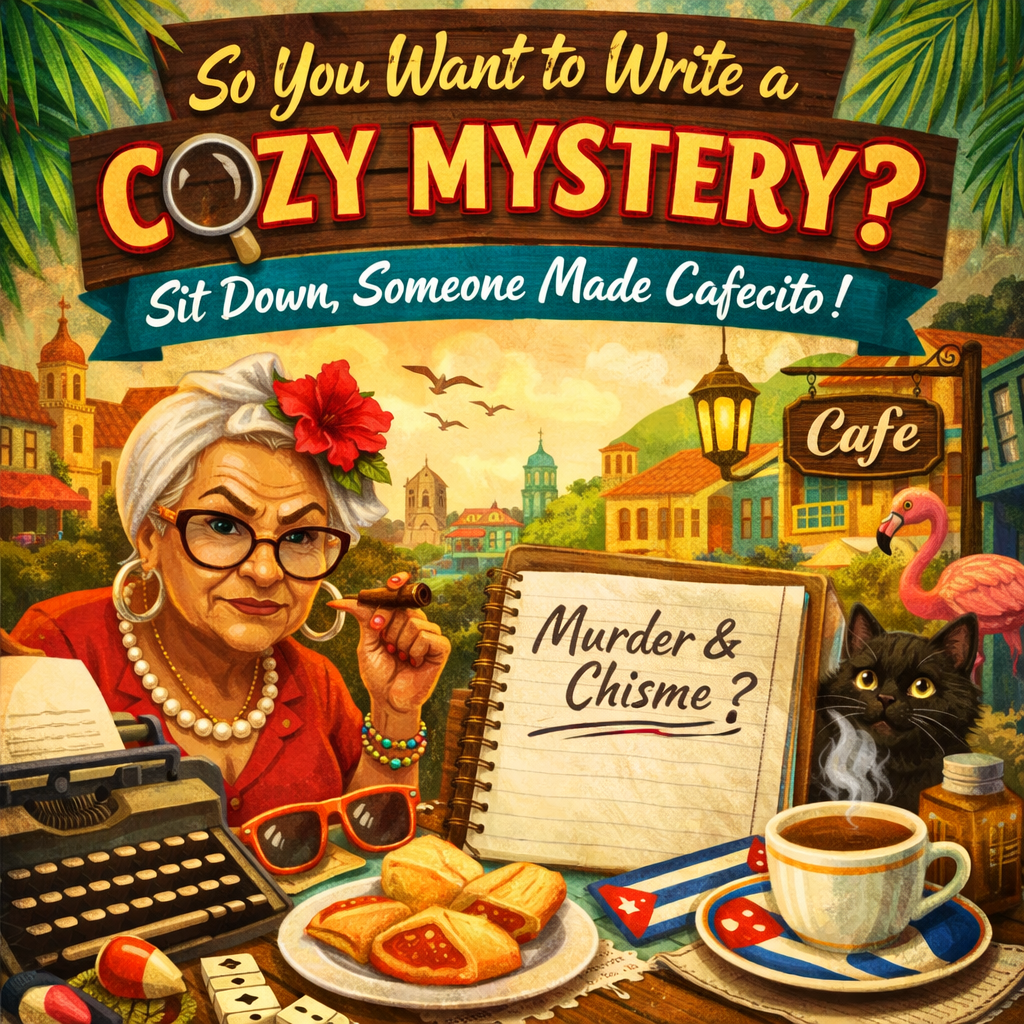
I’m often asked what it really takes to write cozy mysteries, so I decided to share what I’ve learned from what works, what doesn’t, and what cozy readers quietly expect.
So you want to write a cozy mystery.
Excellent choice. Truly. You’ve wandered into one of publishing’s most loyal, comfort-loving genres, the kind where readers don’t just buy a book, they settle in, learn everyone’s business, and expect to be invited back.
But let’s clear something up right away. Cozy mysteries aren’t easy. They’re comforting. That’s not the same thing. Most new writers don’t struggle because they lack talent. They struggle because cozy has rules no one warns you about until readers quietly disappear.
Pull up a chair. Someone made cafecito and there are a few things you should know.
Cozy Mysteries Are Not About Murder
They’re About Belonging. Yes, there’s a crime. Usually murder. Handled politely. No gore. No nightmares.
But the murder is not the point.
The point is:
A place that feels familiar
People who know each other a little too well
A sleuth who asks questions they shouldn’t
And the quiet promise that no matter what happens, the world will be set right again
Cozy mysteries offer emotional safety wrapped in curiosity.
In Cuban terms?
It’s chisme with structure.
Readers don’t come for shock. They come for reassurance, wit, and community. And they know immediately when a story doesn’t deliver that feeling.
Why Cozy Readers Are Loyal (and Ruthless)
Cozy readers are generous.
They’ll forgive: Simple prose, Gentle pacing, Low body counts, but they will not forgive:
A town that feels interchangeable
A sleuth they don’t enjoy spending time with
A mystery that cheats
Or a story that forgets the promise of cozy
Here’s the part most new writers miss:
Cozy readers don’t analyze your book. They feel whether it works. If something feels off, they don’t debate it.
They simply don’t come back. That’s not a writing failure. That’s a foundation issue.
The Mistake Some New Cozy Writer Makes
They treat the setting like wallpaper. A cozy town isn’t background scenery. It’s a character. It remembers things.
It has routines. It has grudges. It has secrets that surface slowly over time.
If your town could be swapped out for another without changing the story, readers sense the hollowness immediately. The same goes for your sleuth. If your main character exists only to solve this mystery, without a life, obligations, or continuity, readers won’t follow them into the next book.
Cozy mysteries aren’t written one book at a time. They’re built. Cozy Is a Designed Genre (Not a Vibe)
This is where many writers get stuck. They assume cozy is: Light, Simple, and Intuitive. Successful cozy mysteries are intentional.
They rely on:
Specific reader expectations
Recurring emotional beats
Consistent tone
Characters built for longevity
Settings capable of sustaining multiple stories
When those pieces are in place, writing becomes easier not harder. When they aren’t, writers burn out trying to “fix” drafts that were never properly supported. Guessing is exhausting. Clarity is liberating.
Why Some Cozy Authors Thrive (and Others Stall)
The difference isn’t talent. It’s preparation. Authors who thrive: Understand cozy reader expectations early. Build towns and sleuths with series in mind. Respect the reader’s role in the mystery. Think beyond one book
Authors who stall often say:
“I just don’t know what’s missing.”
What’s missing is rarely the writing. It’s the blueprint.
Coming Up Next
In Part 2, we’re diving into the true engine of cozy success:
characters, community chaos, and the kind of humor that keeps readers loyal book after book.
If you’ve ever wondered why some cozy characters feel unforgettable and others fade fast that’s where things start to click.
☕
(And yes… we’re just getting started.)